How Much Does a Week in Tokyo During Cherry Blossom Season Actually Cost for a Group in 2026
Cost calculator
Estimated per-person cost for a group of 6 (7 days, Fly West Coast, Shared Airbnb, Mid-range food)
| Category | Per person |
|---|---|
| Flights (West Coast) | $650 |
| Accommodation (Shared Airbnb, 7 nights, split 6 ways) | $327 |
| Food & drink (Mid-range, 7 days) | $350 |
| Local transit (7 days) | $180 |
| Activities | $110 |
| Fees & extras | $80 |
| Total per person | $1,697 |
| Group total (6 people) | $10,180 |
Based on current Tokyo pricing for spring 2026 cherry blossom season.
Use the interactive calculator above to adjust for your group size and preferences.
Everyone in the group chat agreed to Tokyo before anyone converted yen to dollars. This is how it goes. The flight is the expensive part. Daily costs on the ground are lower than comparable US cities.
We put together a full cost breakdown using current 2026 flight data, accommodation listings for cherry blossom season, and published pricing from restaurants, transit systems, and attractions. The numbers below assume a group of 6 spending 7 days in Tokyo.
The short version:
A 7-day Tokyo trip during cherry blossom season for a group of 6 costs roughly $1,100 to $3,400 per person, with flights being the single biggest variable. Based on current flight data, accommodation listings, and published pricing for March/April 2026.
- Budget: ~$1,100
- Balanced: ~$1,700
- Premium: ~$3,400
The full cost breakdown
| Category | Budget | Balanced | Premium |
|---|---|---|---|
| Flights (round-trip from US) | $550 | $700 | $900 |
| Accommodation (7 nights, per person) | $245 | $325 | $980 |
| Food & drink (7 days, per person) | $175 | $350 | $840 |
| Getting around (7 days, per person) | $80 | $140 | $250 |
| Activities & day trips | $20 | $110 | $260 |
| Fees & extras | $50 | $80 | $130 |
| Total per person | ~$1,120 | ~$1,705 | ~$3,360 |
Cherry blossom season (late March through early April) tends to carry a premium on accommodation compared to shoulder season. Booking accommodation well in advance generally secures better rates.
Flights
The flight is the largest single expense and the one that varies most by where you live.
From the West Coast (LAX, SFO, SEA), round-trips run $450–800. Budget carriers like ZIPAIR fly nonstop from LAX and SFO for $450–550 if you're fine with no checked bag and no meal. Full-service airlines average $600–800.
From the East Coast (JFK, BOS, IAD), expect $550–1,000. Most routes connect through a West Coast or Asian hub. Nonstop options exist from JFK and IAD on ANA and JAL but they're at the higher end.
From the Central US (ORD, DFW, ATL, MIA), $500–900. Chicago has some of the better Midwest fares with direct flights on ANA.
Fly into Haneda (HND) if you can. It's about 20 minutes from central Tokyo by train. Narita (NRT) is roughly an hour out and the airport transfer costs more.
Booking well in advance generally gets you better pricing. Cherry blossom season fares tend to run higher than shoulder season.
Accommodation
Group size changes the math on accommodation more than anything else.
Hostels: ~$35/night per person
Dorm beds in Shinjuku and Asakusa run $20–30/night during shoulder season and $30–45 during cherry blossom peak. Private hostel rooms are $50–70. Hostels in Tokyo are clean and well-run. For a group of 6, though, you lose the cost advantage fast because you're paying per bed.
Shared Airbnb: ~$45–55/night per person
A 2–3 bedroom apartment in Shinjuku goes for roughly $200–350/night during cherry blossom season. Split among 6, that's $33–58 per person per night. Asakusa is generally cheaper ($150–280/night total) and puts you closer to Senso-ji and the older Tokyo neighborhoods.
Most Tokyo Airbnbs are small by American standards. A "3-bedroom" often means one bedroom and two rooms with futons on tatami floors.
Mid-range hotel: ~$75/night per person
A 3-star hotel in Shinjuku or Shibuya runs roughly $100–180/night during cherry blossom season, and rooms fit two people. A group of 6 needs three rooms. At $150/night per room, that's $450/night for the group, or $75/person/night — about $525/person for 7 nights. Hotels make more sense for groups of four or fewer. For six people, the Airbnb is almost always cheaper.
Nice hotel: ~$200–400/night per room
Hotels like the Cerulean Tower or Hotel Gracery run $200–350/night per room. The Park Hyatt starts around $400/night and goes up from there.
Food & drink
Food in Tokyo is good at every price point, including the lowest one.
Budget: ~$25/person/day
A 7-Eleven breakfast of onigiri, a salad, and coffee runs $4-5. A FamilyMart bento for lunch is $3-4. Dinner at a ramen counter is $6-8. You can eat well for $20-25/day, and half your group will end up doing this by choice, not necessity.
Grocery stores (Life, OK Store) sell sushi platters, prepared meals, and beer for less than restaurants. Groups with an Airbnb kitchen should plan on at least two grocery store runs.
Mid-range: ~$50/person/day
Konbini breakfast ($4), a lunch set at a mid-range restaurant ($7-10, lunch specials are everywhere in Tokyo), and an izakaya dinner with a couple beers ($20-34). This is where most groups land. You eat well without ever worrying about prices.
Izakaya charge a small cover (otoshi, ¥200-1,000) that comes with a small dish. It's not a scam. It's how izakaya work. Draft beer runs ¥500-800 ($3-5), which is less than what you'd pay at a bar in any US city.
Premium: ~$120/person/day
You eat at the good sushi place ($67-130 for omakase), try a kaiseki lunch ($67), and order whatever looks interesting the rest of the time. A nice dinner with drinks in Shibuya or Shinjuku runs $50-80/person. You're still spending less per day than a comparable food experience in New York or London.
One thing that catches American groups off guard: there's no tipping. The price on the menu is the price you pay. A ¥3,000 dinner is $20. That's it.
Getting around
Tokyo's train system is fast and cheap. The map looks overwhelming but an IC card simplifies everything to tap-on, tap-off.
IC card (Suica/Pasmo): your default
Available digitally through Apple Wallet or Google Pay, or as a physical card at airport kiosks and station machines. Tap on, tap off. Reload at any station or via the app. A typical day of subway rides costs roughly ¥500–1,000 ($3–7) depending on how many neighborhoods you hit.
Tokyo Metro day passes
The 72-hour Tokyo Subway Ticket is ¥2,000 (~$13) and covers all Tokyo Metro and Toei subway lines. Worth it if you're doing 4+ rides a day. Over 7 days, mixing day passes and single rides typically works out to $60–80/person.
Airport transfer
Narita Express: about ¥3,100 ($21) each way, roughly 53 minutes to Tokyo Station. Skyliner: about ¥2,500 ($17) each way, roughly 36 minutes to Ueno. From Haneda, the monorail or Keikyu line is about ¥500 (~$3). This is why Haneda is better. Check carrier sites for current fares before booking.
Taxis
Short rides (1–2km) typically cost about ¥500–700 ($3–5). Cross-city rides often hit ¥3,000–4,000 ($20–27). After 10pm there's a late-night surcharge. Taxis in Tokyo are clean and reliable but expensive for groups that use them as a default. Save taxis for late-night rides back from Golden Gai or when someone's too tired to figure out the train map.
JR Pass: probably not worth it
The 7-day JR Pass is about ¥50,000 (~$333). It's typically overpriced for a Tokyo-only trip. You'd need to take multiple shinkansen day trips to break even. If you're only doing one day trip to Kamakura or Hakone, pay the individual fares.
Activities & day trips
Many major attractions are free or cost under ¥500.
Free
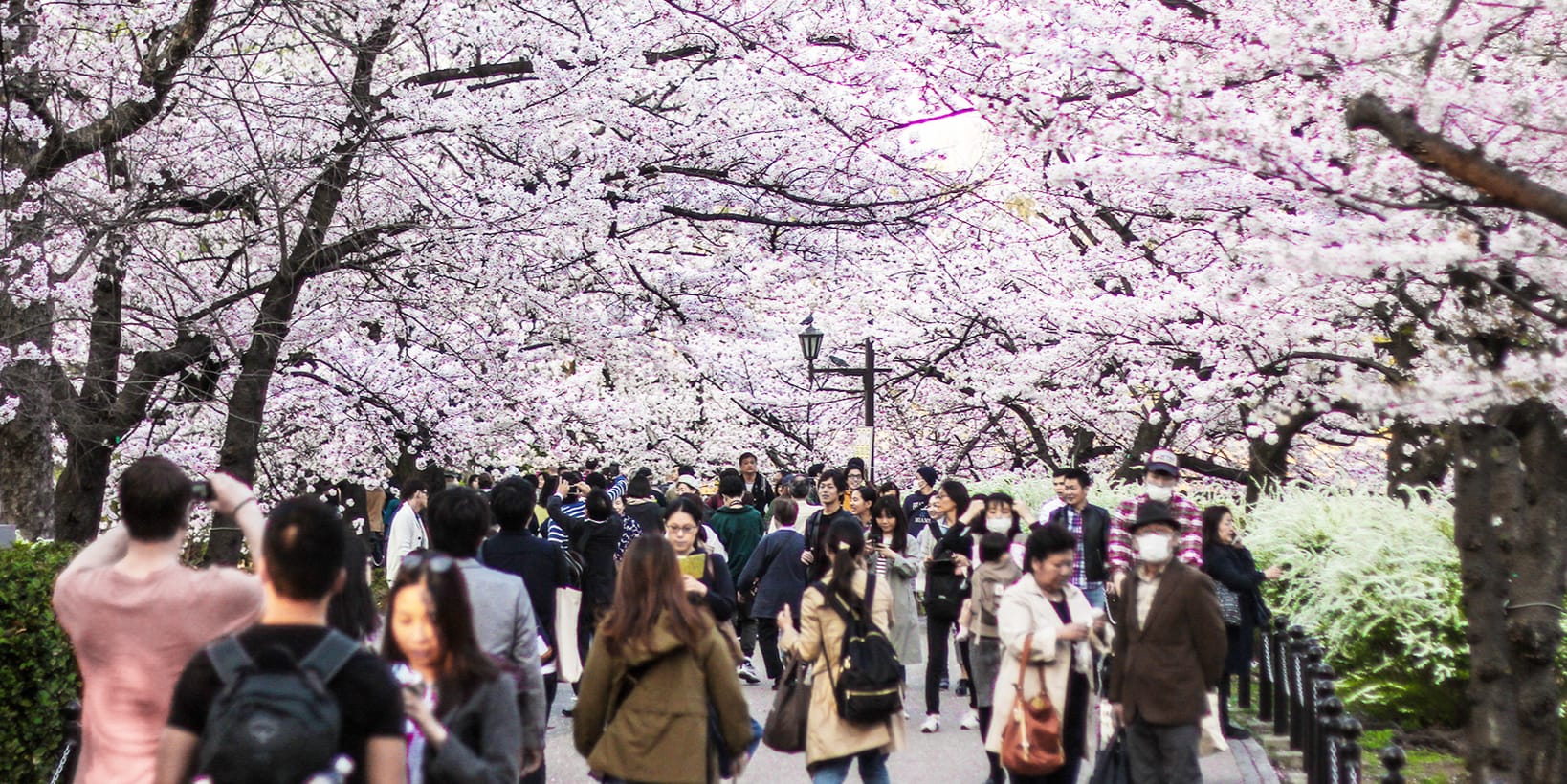
Hanami (cherry blossom viewing) at Ueno Park, Meguro River, Chidorigafuchi. Meiji Jingu and Senso-ji are free. Walking through Shibuya, Harajuku, Akihabara, Tsukiji Outer Market. The observation deck at the Tokyo Metropolitan Government Building is free and has better views than most paid options.
Paid attractions
Shinjuku Gyoen (the best cherry blossom park in Tokyo) is ¥500 ($3.30) but requires advance booking during peak bloom (March 28-April 5). Book online before you go. Tokyo Skytree is ¥2,100-2,400 ($14-16). teamLab Planets is about ¥3,800 ($25). These add up but none of them are expensive individually.
Day trips
Kamakura: ¥1,880 ($12.50) round-trip train, ¥700-900 ($5-6) in temple fees, plus lunch. About $25-35/person all in. The Great Buddha and Hasedera Temple are worth the trip, especially if cherry blossoms are still going.
Hakone: the Hakone Free Pass is ¥7,100 ($47) and covers the round-trip train from Shinjuku plus all local transportation (cable car, pirate ship, ropeway). Add ¥500-2,000 ($3-13) for an onsen. Total: $50-60/person.
Most groups do one day trip. Some do two. Budget accordingly.
What catches American groups off guard
Convenience stores will quietly become 15% of your food budget. You'll stop for an onigiri before the train, a coffee after lunch, a beer and snacks before dinner. None of these purchases feel significant. A ¥150 onigiri four times a day for seven days is ¥4,200 (~$28). Multiply by 6 people and your group spent $168 at 7-Eleven without noticing.
Cash is still king in a lot of places. Chain restaurants, train stations, and department stores take cards. Small ramen shops, izakaya, shrines, and market stalls are often cash-only. Hit a 7-Eleven ATM when you arrive and pull ¥20,000–30,000 ($130–200). Seven Bank ATMs accept most international debit cards and typically charge about ¥110–220 per withdrawal. If the ATM asks about currency conversion, always decline — the alternative often adds a markup.
Coin lockers are essential. If you're doing a day trip and don't want to carry bags, station lockers typically run about ¥400–800 ($3–5) per day. They fill up at major stations by mid-morning during cherry blossom season. Use the ones at smaller stations along your route.
Your phone will not work without a plan. Get a pocket WiFi (typically $6–14/day, rentable at the airport, one device covers your whole group) or a SIM card (typically $14–34 for 7 days, single device). Get the pocket WiFi if you're in a group. One device, everyone connects.
Luggage forwarding is widely available. Yamato Transport (look for the black cat logo) and other carriers ship suitcases between the airport and your hotel, typically arriving next day. Costs vary by bag size and route; a reasonable planning number is ¥2,500–3,500 (~$17–23) per bag. On the return trip, ship bags the day before your flight and walk to the airport hands-free. This service is everywhere and it works.
How the three tiers actually feel
| Budget | Balanced | Premium | |
|---|---|---|---|
| Sleep | Hostel dorms or cramped Airbnb | 2BR Airbnb in Shinjuku, futons and all | Hotel with breakfast, real beds |
| Eat | Konbini meals, standing ramen, grocery runs | Mix of konbini, lunch sets, izakaya dinners | Good restaurants, sushi omakase, kaiseki lunch |
| Drink | Convenience store beer, one izakaya night | Izakaya 2-3 times, draft beer freely | Cocktail bars, sake tastings, Ginza nightlife |
| Get around | Subway passes, walk a lot | Subway + occasional taxi | Subway + taxis when convenient |
| Do | Free parks, temples, walking neighborhoods | Free + 1-2 paid attractions + a day trip | Everything, private guides optional |
| Per person | ~$1,120 | ~$1,705 | ~$3,360 |
Most groups end up somewhere between budget and mid-range for daily costs, then one or two splurge dinners push them into mid-range territory. The flight is the fixed cost. Ground costs in Tokyo run lower than New York or London for comparable food, transit, and accommodations.
How groups keep it together
Get a shared pocket WiFi at the airport. One device, one rental fee split six ways. Without it, half the group gets lost on day one and racks up roaming charges.
Designate one person to load their Suica card with extra money for group expenses like coin lockers and vending machines. Settle up at the end of each day rather than at the end of the trip. Small daily transactions are easier to track than a week's worth of konbini receipts.
Use a group chat thread just for money. When someone pays for a round of izakaya drinks or buys the group's Shinjuku Gyoen tickets, it goes in the thread. Settle receipts at the end of each day so nobody's carrying a balance for the whole trip.
Eat at places that give individual checks. Most Japanese restaurants do this by default.
The bottom line
The yen is weak against the dollar and flight prices for spring are lower than fall. If your group has been talking about this trip, the window is good.
Looking at other group trips? Check out our Nashville bachelorette cost guide and Coachella 2026 cost breakdown.